ERP System in Healthcare: A Comprehensive Guide
ERP systems help hospitals work in a more organized and smooth way. All patient and staff information stays in one place, so nothing gets lost or confused. Doctors can quickly check medical records when they need them. Staff can manage appointments and daily tasks without stress. Patients get faster service and clearer communication. There is no need to dig through files or wait for updates. Billing becomes easier and schedules stay on track. Hospitals also save time and reduce extra costs. Most importantly, an ERP system allows the hospital team to give more attention and care to the patients, not the paperwork.
ERP stands for Enterprise Resource Planning. While it may sound complex, it simplifies operations. It links all parts of a hospital, from patient records to inventory and billing to appointments. So everything works together seamlessly. This integration improves efficiency, saves time, and reduces expenses. In this blog, we will explore how ERP systems help healthcare. We will see how they improve patient care and make work easier for doctors and staff.
Table of Contents
- What is ERP and What Are its Functionalities?
- Market Demand for ERP System
- Role of ERP Systems in Healthcare
- How ERP in Healthcare Works?
- Types of ERP Systems in Healthcare
- Key Features of Healthcare ERP System
- What is the Importance of ERP in Healthcare?
- Key Advantages of ERP Systems in Healthcare Organizations
- What ERP Do Hospitals Use?
- How to Choose the Best ERP System for Healthcare?
- Cost to Build ERP Software for the Healthcare Industry
- Why Choose VCDoctor for Your ERP Solutions?
- Conclusion
- FAQs
- 1. Mention the significance of ERP systems in the healthcare sector?
- 2. What are the uses of ERP systems in healthcare?
- 3. What kind of businesses are using ERP systems?
- 4. How do ERP systems help businesses worldwide?
- 5. List some challenges of ERP systems in the healthcare industry
- 6. What factors affect the overall cost of ERP implementation and maintenance?
What is ERP and What Are its Functionalities?
ERP is a systematic approach to unite, streamline, and conceptualize the business methodology of the organization in different zones and segments. ERP works on the consolidated system platform by utilizing a single company database.
Enterprise Resource Planning simplifies the tasks of human resources, finance, distribution, procurement, and other channels of the company. With the successful implementation of ERP software, the process becomes smoother and it happens to be cost-effective.
Market Demand for ERP System
Here are some key stats highlighting the growing market demand for ERP systems:
- The global healthcare ERP market is projected to reach $16 billion by 2034
- 40% of companies adopt ERP systems to gain better functionality
- Healthcare ERP adoption is forecasted to increase by 12% annually through 2025
- 70% of ERP users report improved decision-making with advanced analytics
- 65% of organizations believe AI is now critical to ERP success
- 70% of large enterprises already rely on ERP systems
Role of ERP Systems in Healthcare
ERP systems help hospitals stay organized and efficient by connecting all key operations like finance, HR, and patient data in one platform.
This link between departments leads to cost cuts, reduces errors, and supports faster patient care.
Here are the main areas where ERP systems make the biggest impact:
1. Financial Management
- Automates billing and claims to save time and speed up payments
- Supports budgeting and planning for better financial control
- Offers clear reports for smarter decisions
2. Operational Efficiency
- Tracks medicines, supplies, and equipment to prevent shortage or waste
- Manages payroll attendance and staff schedules easily
- Keeps all data safe and accessible in one place
3. Patient Care and Compliance
- Maintains accurate patient records under HIPAA standards
- Improves coordination among doctors, labs, and admin teams
- Provides real-time updates for quick and effective care
In short, ERP systems unite every part of a healthcare organization, helping save time, simplify tasks, and enhance patient experience.
Have Questions About the ERP System?
Chat with us on WhatsApp and get expert advice instantly.
Talk to Our ExpertsHow ERP in Healthcare Works?
Earlier hospitals used to have separate systems for billing staff and patient data. The systems did not communicate, which slowed down workflows and increased costs. Doctors and staff were forced to spend time manually managing the costs.
A healthcare ERP system solves this. All departments are connected in a single location. Finance, HR, inventory, and patient data were collated into a single system that everyone could see at any time.
With an ERP system, daily work is made easier and faster, especially when linked with remote patient monitoring software to support continuous patient tracking. Hospitals can better track resources and control expenses. Doctors quickly access the information they need and make fast decisions.
Types of ERP Systems in Healthcare
Different types of ERP systems are available today. Each one works in its own way and serves different needs. Let’s explore the three most important types of ERP systems in healthcare:
1. On-Premise ERP
In an on-premise setup, the healthcare organization is going to host the ERP system on its own servers. All data will stay within the healthcare organization, ensuring total authority and privacy. On-premise easily provides significant customization, but it will require a substantial investment in hardware, space, facility, and technical staffing. Typically, large healthcare organizations operate on an on-premise ERP model since they have resources and want control over their data.
2. Cloud ERP
Cloud ERP works through the internet and runs on remote servers. It is designed for smaller healthcare facilities that value flexibility without involving any high up-front costs. Cloud ERP requires very little maintenance, is a simple and cost-effective option, and can grow with the hospital, which is very useful for an organization that may navigate many service changes.
Read Also: Top Benefits of Cloud Computing in Healthcare
3. Hybrid ERP
Hybrid ERP is a mixture of cloud and on-premise, where the organization can keep some of its data, programs, or systems on its own hardware, while managing the rest online. It offers a combination of control without the full responsibility on the organization. For mid-sized healthcare organizations, this is an appropriate choice to balance cost and security.
Key Features of Healthcare ERP System
A good healthcare ERP system keeps everything connected. It makes work simple and helps hospitals focus more on patients and less on paperwork. Here are some key features that make the ERP system most useful in healthcare:
1. Scheduling and Appointment Management
An ERP system can manage appointments without confusion, and can work alongside tools from a telemedicine app development company for virtual consultations. You can also track doctor availability and patient visits easily. It also reminds patients so they don’t miss their slot.
2. Integration with Medical Billing
Billing becomes easy and error-free when connected with medical billing software, as the ERP manages all invoices, insurance claims, and payments in one location. That will ensure smooth processes and transparency.
3. Patient Information Management
All patient information is stored securely and orderly in one system. Doctors and staff can access their medical history and report any time they need to. It keeps things accurate and convenient.
4. Data Reporting and Analytics
Using ERP helps turn data into metrics. You will know how performance is managed and how the results are going. You can utilize these reports for better planning and solid decision-making.
5. Inventory and Supply Chain Management
It monitors all medications and equipment. You receive alerts when inventory gets low. It allows for cost savings while making sure offices don’t run out of needed items.
6. Human Resource Management
The ERP system handles staff management in a simple way. Every aspect of payroll, attendance, and scheduling is in one location. It provides quick access to performance tracking. It keeps the healthcare team organized.
What is the Importance of ERP in Healthcare?
Enterprise resource planning (ERP) is a crucial tool for companies that rely heavily on supply chain and logistics management. In the healthcare industry, ERP is essential for managing multiple units and departments that require continuous updates and synchronization for efficient workflow.
Beyond the doctors and patients, the healthcare industry also involves managing medical supplies, inventory, pharmacy, patient relationships, staff, and doctor management, billing and payments, revenue cycle management, supply chain management for pharmaceutical manufacturers, and more. To ensure an organization’s efficient operations, all these components need to be reviewed and updated in real-time.
By implementing a good ERP system, healthcare organizations can maintain coherence among their various departments and modules, leading to better client/patient relationships and improved profitability. Partnering with a trusted custom healthcare software development company can make this transition smoother, ensuring the ERP is customized to your workflows and scales as your organization grows. ERP can significantly improve business operations and support long-term growth for healthcare organizations.
Want to Streamline Your Hospital or Clinic Workflows?
Book a live demo with our solution specialist to see how our ERP system boosts efficiency and simplifies operations.
Schedule a Meeting NowKey Advantages of ERP Systems in Healthcare Organizations
1. ERP System for Hospitals
Enterprise Resource Planning (ERP) can bring numerous benefits to hospitals, including reducing operational costs, initiating best healthcare practices, enhancing patient safety, providing business intelligence and planning, managing inventory, and electronic storage of information.
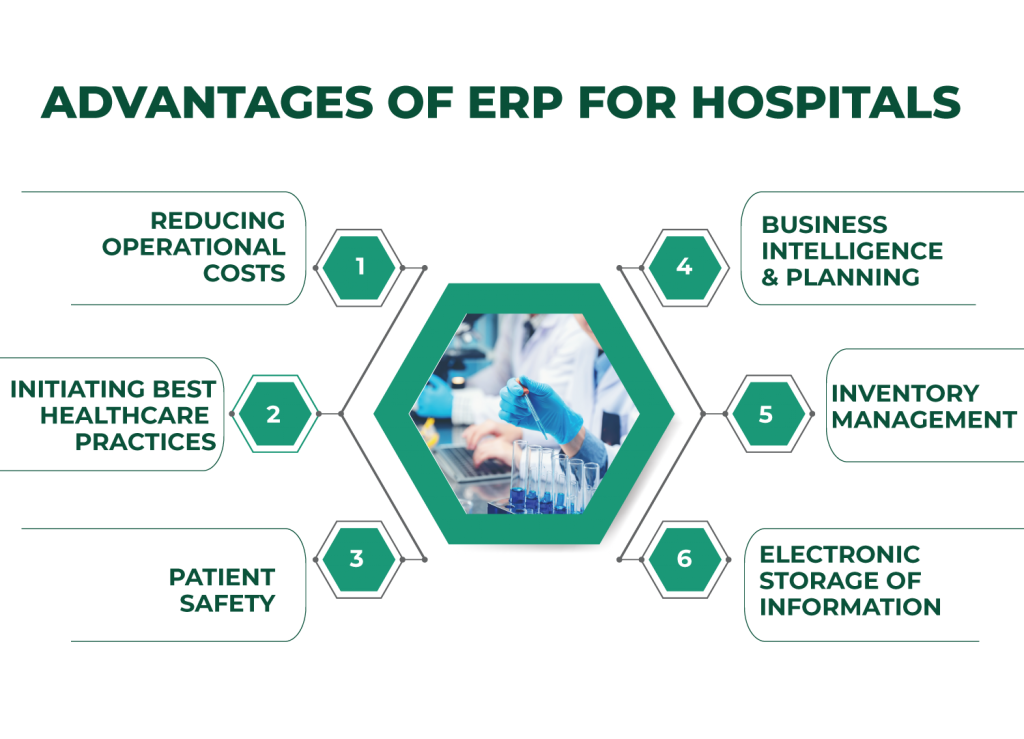
Reducing Operational Costs
ERP software automation can improve the alignment of various units such as staff management, payroll, accounting, patient care, billing, and more. Consequently, it can free up resources, improve communication, and lower costs.
Initiating Best Healthcare Practices
By integrating important facilities, hospitals can initiate some of the best practices for patient care. It can enhance coordination and collaboration between different specialty departments such as radiology, OPD, and emergency services, and offer better services.
Patient Safety
An ERP program aids in enhancing patient safety as well. It streamlines communication between doctors and patients, establishing a culture of patient wellness at every level from registration to checkout.
Business Intelligence and Planning
ERP helps identify problem areas and targets them, improving overall performance. Top management can monitor and evaluate the effectiveness of the current policies using an ERP system. It can also be an effective business intelligence tool to compute and evaluate operational effectiveness and provide details on spending, requests, and patient visits.
Inventory Management
A hospital’s inventory comprises various medical items. Managing sales, supplies, and refills is not easy. An ERP system makes inventory control easy. With an ERP, business owners can automate expiry alerts – enabling them to take action on time. It is simpler to estimate and plan a reorder with the supplier.
Electronic Storage of Information
To maintain the security and privacy of all the data, hospitals need to store a vast amount of information pertaining to patients, their contact details, visit details, billing details, and more. ERP software for the healthcare industry can help store all this information safely and securely. With an ERP system, users can easily update all the data entered into the application.
Read Also: How is VCDoctor Beneficial for Hospitals?
2. ERP System for Medical Supplies Industry
Medical equipment manufacturers must maintain compliance with regulatory bodies, making an efficient ERP crucial for the industry. Here are some of the advantages of ERP for the medical supplies industry:
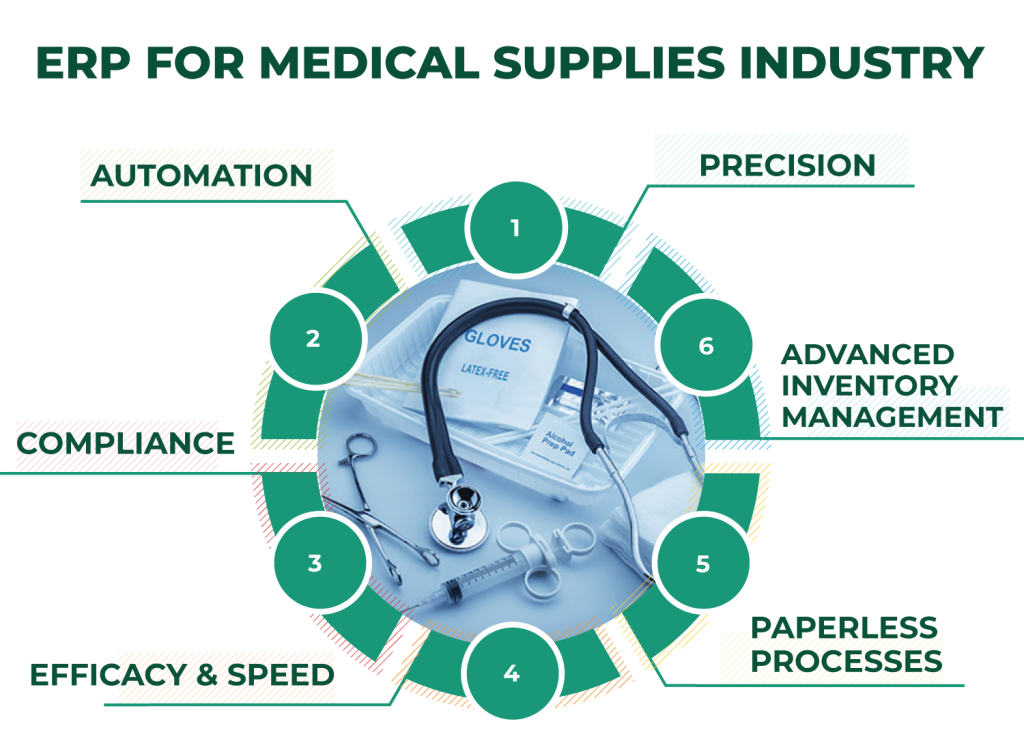
Automation
ERP systems automate data entry, reducing time, effort, and errors in the system. This feature allows teams to work efficiently and focus on more profitable tasks.
Compliance
The FDA provides Quality System Regulations (QSR) that encompass device design, validation, manufacturing procedures, investigations, and device performance assessment. ERP helps medical device manufacturers track manufacturing, purchasing, paperwork, and product traceability, ensuring successful quality management of medical devices.
Efficacy and speed
Speed and efficiency are essential in the medical device manufacturing industry, particularly in meeting the instant demands of medical equipment. ERP can boost performance and productivity throughout the whole supply chain.
Paperless processes
ERP’s automation feature helps companies manage multiple tasks effortlessly and get rid of outdated methods, ensuring the accuracy of information.
Advanced inventory management
Inventory management is essential for consistent supply, and ERP helps get insights for forecasting, order processing, and managing stock, contributing to the industry’s respite.
Precision
For medical device manufacturers, the quality of their products is critical for patient care. ERP features like batch tracking, stock management, audit trails, and real-time order updates help ensure quality assurance and traceability. An advanced ERP solution can help manufacturers achieve this.
3. ERP System for Pharmaceutical Industry
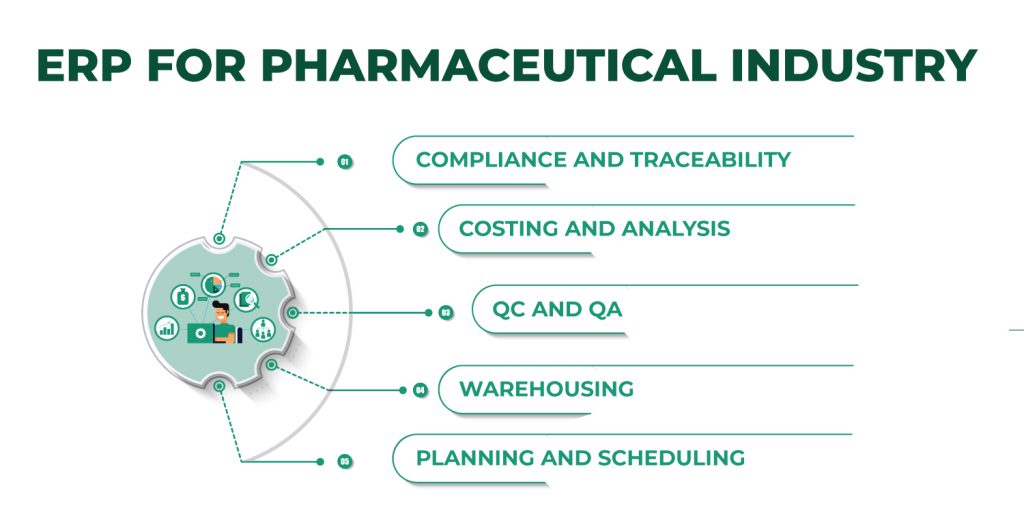
An ERP system for the pharma manufacturing sector can streamline manufacturing procedures and expedite distribution while being compliant with strict FDA regulations. Here is a list of advantages of ERP for the Pharmaceutical Industry
Compliance and Traceability
An ERP can dynamically adjust formulas to achieve cost and physical target parameters, create audit reports compliant with master batch records, and draft traceability reports.
Costing and Analysis
Pharma companies need to optimize resource utilization for MRP planning and monitor fixed, variable, and labour costs to control costs. An ERP system lets them dynamically adjust recipes to meet cost target values.
QC and QA
Pharma manufacturing needs quality control, and an ERP system can create libraries for customized instructions, inspection checklists, and quality control.
Warehousing
With the aid of ERP, businesses may carry out pick, pack, shipping, receiving, and put away duties within the warehouse while reducing errors and rework and obtaining crucial data.
Planning and Scheduling
Companies must plan and schedule resources for the production cycle to ensure on-time delivery, and ERP can track resources, manage production schedules, and control material requirements planning (MRP).
What ERP Do Hospitals Use?
The section contains a list of the Enterprise Resource Planning (ERP) Software that a hospital must use.
1. Evident
Evident is an ERP platform that offers reliable EHR software for rural and community healthcare centers. It helps keep patient records organized, improves care coordination, and makes daily clinical work smoother for staff and providers.
2. Healthland
Healthland software builds a health-based IT system for the community, rural, and inpatient psychiatric hospitals. It is an EHR-based health solution that boosts telehealth rapidly.
3. Infor
This suite is majorly known for its hospital and patient information, health plans, medical benefits, and for its ERP solution that offers human capital management, etc.
4. Meditech
Meditech has an integrated ERP solution that can help in the management of reimbursements & medical billing, decreasing supply chain costs, deploying profitable teams, etc.
How to Choose the Best ERP System for Healthcare?
Choosing an ERP system for your hospital or clinic is an important step. The right choice will save time and make your team’s work easier. Follow these simple steps to find what fits your needs best:
Step 1: Identify Your Healthcare Needs
First, find out what your organization requires. While hospitals may want an ERP system for billing and patient data management, clinics may want features for EHR and appointments. Create a list of what is most important to your organization at the beginning.
Step 2: Look for the Right Features
Your ERP solution should fit your organizational goals and daily workflow. Select solutions that provide secure data storage while meeting all healthcare protocols. It should also work easily with your medical devices and existing software.
Step 3: Check Integration Capabilities
Your ERP should integrate effectively with the systems you are currently using. The solutions should support EHR integration along with lab applications, billing systems and patient portals. This reduces manual work, prevents data duplication, and saves time.
Step 4: Review the Vendor’s Strengths
Your vendor should be someone you can support. Check to see if they have both cloud and on-premise solutions. Ask about their support, training, and updates with their solutions. Look at their client reviews to see how engaged their clients are in the day-to-day health care system.
Step 5: Test Before You Decide
Always see the system in real use before making a final decision. Ask for a live demo or a short trial. Watch how it performs with daily tasks. Choose the one that feels simple, stable, and right for your team.
That’s it. Once you follow these steps, choosing the right ERP for your healthcare setup becomes simple and clear.
Cost to Build ERP Software for the Healthcare Industry
The cost of building a healthcare ERP system depends on your size and needs. On average, it ranges from $50,000 to $750,000.
The main costs include setup, customization, training, and integration. You may also pay for maintenance and support after launch.
Small clinics spend less on basic ERP solutions. Large hospitals need more advanced systems, which cost more.
| Business Size | Estimated Cost |
| Small | $50,000 to $150,000 |
| Mid Size | $150,000 to $750,000 |
| Large | $750,000 and above |
Why Choose VCDoctor for Your ERP Solutions?
Revolutionize your healthcare operations with VCDoctor’s innovative ERP system, designed precisely to fit your organization’s needs. Whether you want to simplify patient management, enhance financial control, or improve data security, the VCDoctor ERP empowers you to run your practice better and faster. Contact us today!
Need a Custom ERP Implementation or Integration plan?
Our experts will help you select the right modules, rollout strategy and support plan.
Get an Expert ConsultationConclusion
These are the few benefits & importance of ERP solutions for the healthcare industry. Many businesses have started applying this mechanism to their work to drive thriving business opportunities and desired business growth. Simultaneously, the work has now been more streamlined with the help of Enterprise Resource Planning solutions.
VCDoctor telemedicine solutions have a wide range of effective solutions for your business. We deliver efficient solutions with ultimate customer satisfaction. Get in touch with our experts today and discuss your requirements!
FAQs
1. Mention the significance of ERP systems in the healthcare sector?
ERP systems in the healthcare sector are designed and developed to operate and manage the ongoing financial process. It tracks the overall income, expenses and assets of a business.
2. What are the uses of ERP systems in healthcare?
Some primary uses of ERP systems in healthcare include promoting efficient use of resources, organizing information for easy accessibility, and providing insights into accounting and finance information.
3. What kind of businesses are using ERP systems?
Some significant industries where ERP systems are widely used are healthcare, pharmaceutical, manufacturing, e-commerce, and nonprofits or governments.
4. How do ERP systems help businesses worldwide?
ERP systems help businesses streamline workflows, automate processes, make faster decisions, track orders, manage inventory levels, streamline procurement, and optimize products.
5. List some challenges of ERP systems in the healthcare industry
Some major challenges of ERP systems in the healthcare industry include high cost, ERP systems are complex, stakeholders and staff may resist changes, challenges with integrity and data quality and difficulties in regular updates and maintenance.
6. What factors affect the overall cost of ERP implementation and maintenance?
Some primary factors affecting the overall cost of ERP implementation, upgradation and maintenance are ERP system complexity, scope of work, overall customization required and more. Based on these factors, the cost may fluctuate.